Apple’s Privacy-Focused AI Smart Glasses Could Debut in 2027: Will They Challenge Meta?
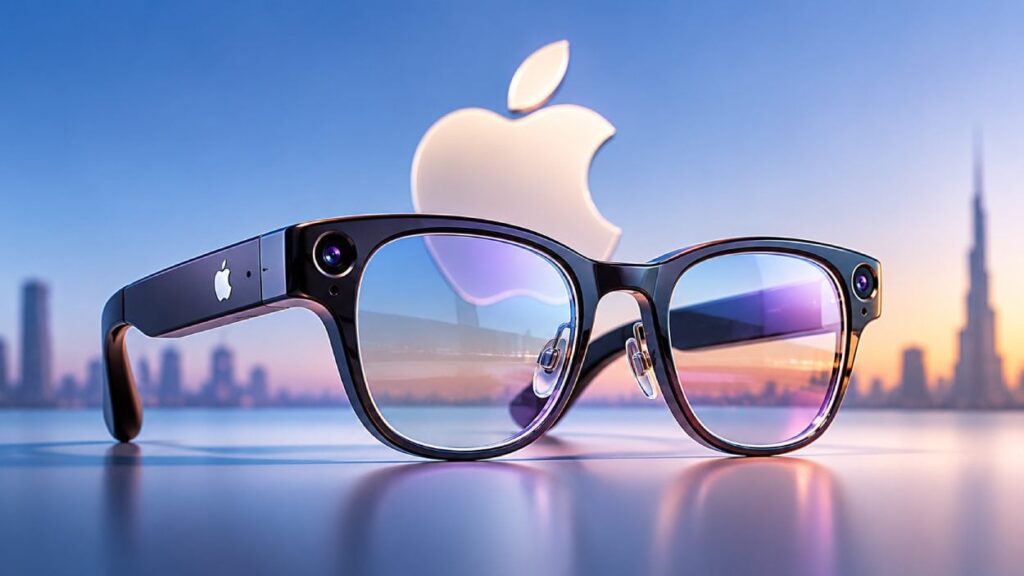
According to a Bloomberg report, Apple could unveil its long-awaited AI-powered smart glasses during the Worldwide Developers Conference (WWDC) in June 2027. The company is expected to give developers their first look at the device during the event, while the official commercial launch could take place later in the year, ahead of the holiday shopping season.
Apple has been working on smart glasses for several years. However, the project has reportedly undergone multiple internal changes, with the launch timeline pushed back as the company worked to address privacy concerns surrounding wearable AI devices.
Privacy Could Be the Biggest Highlight of Apple’s AI Smart Glasses
According to reports, Apple is placing user privacy at the center of its smart glasses strategy to differentiate the product from competing devices.
The company is said to have tested a camera-free version of the smart glasses. It is also exploring another design that includes cameras but disables the ability to capture photos or record videos.
Instead, the cameras would be used only to understand the user’s surroundings and provide visual information for AI-powered features. This would enhance the overall user experience without allowing image or video recording. Reports also suggest that Apple could bring similar AI-powered visual capabilities to future AirPods.
Apple Wants to Avoid the Privacy Controversies Faced by Meta
Apple reportedly aims to steer clear of the privacy issues that have surrounded Meta’s AI smart glasses.
Meta’s smart glasses look almost identical to regular sunglasses or prescription glasses. Equipped with cameras, microphones, and speakers, they allow users to make calls, use navigation, interact with AI assistants, take photos, and record videos hands-free.
However, the built-in cameras have sparked several privacy controversies. There have been multiple reports of people being recorded without their knowledge or consent, with those videos later appearing online.
Apple’s reported decision to limit or completely disable photo and video recording could help address these concerns while still delivering AI-powered visual features.
Apple’s Smart Glasses Could Compete Directly With Meta
Although Apple is prioritizing privacy, its upcoming smart glasses are still expected to feature a camera, microphone, speakers, and Siri integration, putting them in direct competition with Meta’s AI smart glasses.
Meta currently dominates the global AI smart glasses market, accounting for an estimated 80% of worldwide sales. Its early entry into the category helped the company establish a strong market position.
Developed in partnership with EssilorLuxottica, Meta’s smart glasses feature the iconic Ray-Ban design. Internationally, the devices start at $299 (approximately Rs. 28,764).
More Tech Giants Are Entering the Smart Glasses Race
Apple is far from the only company investing in AI-powered smart glasses.
Snap has already announced that it will launch the next generation of its Specs smart glasses later this year. Unlike Apple’s expected offering, Snap’s device will primarily focus on augmented reality (AR) and is expected to carry a starting price of $2,195 (around Rs. 211,165).
Meanwhile, Google is preparing to re-enter the smart glasses market more than a decade after the consumer launch of Google Glass failed due to its high price and widespread privacy concerns.
This time, Google is reportedly partnering with Samsung to develop a new pair of AI-powered smart glasses, which are expected to launch later this year.
Can Apple Make AI Smart Glasses the Next Big Tech Trend?
If Apple succeeds in combining advanced AI capabilities with strong privacy protections and seamless integration across its ecosystem, its smart glasses could play a key role in bringing AI wearables into the mainstream.
Apple’s entry is also expected to intensify competition in the rapidly growing smart glasses market, where Meta, Google, and Snap are already positioning themselves as major players.