


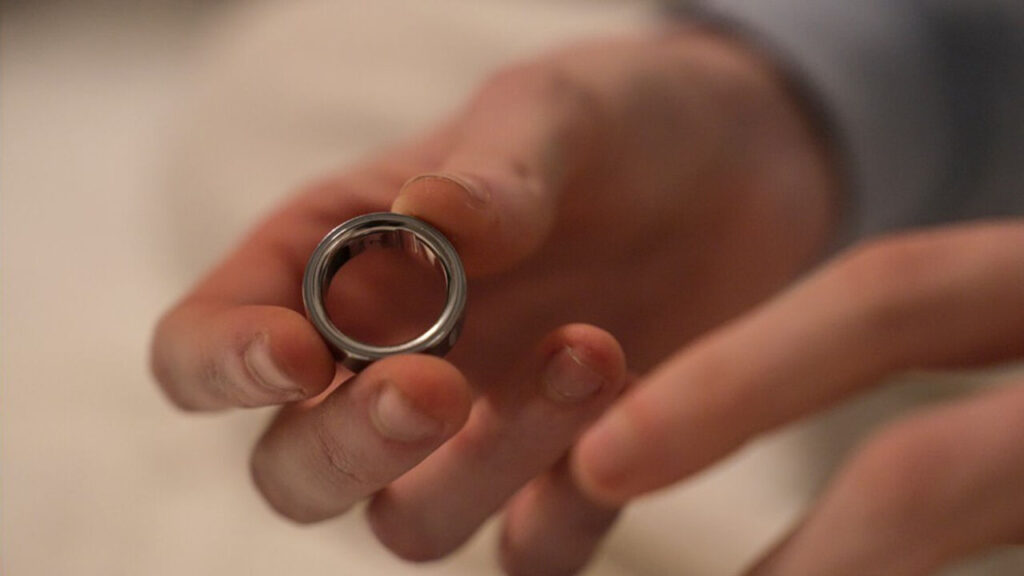
Popular smart ring company Oura is facing a legal dispute over its sleep-tracking technology. The company has been accused of making misleading and overly precise claims about its rings’ ability to track sleep and identify different sleep stages.
The Finnish company is best known for its health and fitness-focused smart rings. A proposed lawsuit filed against Oura alleges that the company misled consumers by marketing its rings as capable of accurately measuring sleep quality and identifying various sleep stages.
The Clarkson Law Firm in San Francisco filed the lawsuit last week. According to the complaint, Oura marketed its rings as “built for accuracy” and claimed they offered “unparalleled accuracy” in sleep-stage tracking, including Wake, Light, Deep, and REM Sleep.
However, the complaint argues that Oura Rings do not contain the sensors required to directly measure the brain activity and eye movements needed to determine sleep stages.
Why Is Oura’s Sleep-Tracking Technology Being Questioned?
According to the lawsuit, accurately identifying sleep stages typically requires clinical methods such as Polysomnography (PSG). It is considered the gold standard for sleep analysis and uses equipment such as scalp electrodes and eye sensors to record brain activity, eye movements, and other physiological signals.
The complaint alleges that Oura Ring’s hardware cannot directly measure these essential signals. As a result, the plaintiffs argue that the ring cannot determine a person’s actual sleep stage with the same level of accuracy as a clinical sleep study.
The lawsuit also claims that Oura capitalized on consumers’ growing interest in detailed sleep tracking by selling rings priced at $300 or more while heavily promoting their ability to identify different sleep stages.
The legal filing references Oura’s previous claim of 79% sleep-stage tracking accuracy. It also challenges the company’s more recent claim of “95% Sleep Staging Accuracy compared to clinical sleep lab.”
The lawsuit was filed on behalf of Madison Surber, a California resident who purchased an Oura Ring for $513.68 in 2025. According to the complaint, she decided to purchase the ring based on the company’s marketing claims.
The plaintiffs summarized their argument with the statement: “Sleep happens in the brain, not on one’s finger.”
Oura Denies the Allegations
Oura has rejected the allegations made in the lawsuit and said it intends to defend itself.
A company spokesperson told USA Today that Oura disagrees with the allegations in the complaint and will respond to them through the legal process.
The company also clarified that its smart ring is not a substitute for a clinical sleep study. However, Oura maintains that its sleep-tracking methodology has been validated through multiple studies and has performed well when compared with laboratory-based sleep studies.
Oura’s Smart Ring Business Continues to Grow
Launched in 2015, Oura has established a strong position in the smart ring market. While several major technology companies have struggled to achieve significant success in the category despite substantial research and marketing resources, Oura has built its brand around health and wellness tracking.
The company’s business has continued to expand as well. Earlier this year, Oura filed a draft prospectus for its proposed IPO with the U.S. Securities and Exchange Commission (SEC).
Oura previously announced that it had sold more than 5.5 million Oura Rings since the product launched. By June 2024, the company had sold approximately 2.5 million units.
The legal dispute could bring greater scrutiny to marketing claims made by Oura and other wearable companies regarding the accuracy of health and fitness features. This could be particularly important for features that involve measurements traditionally performed using clinical-grade equipment.